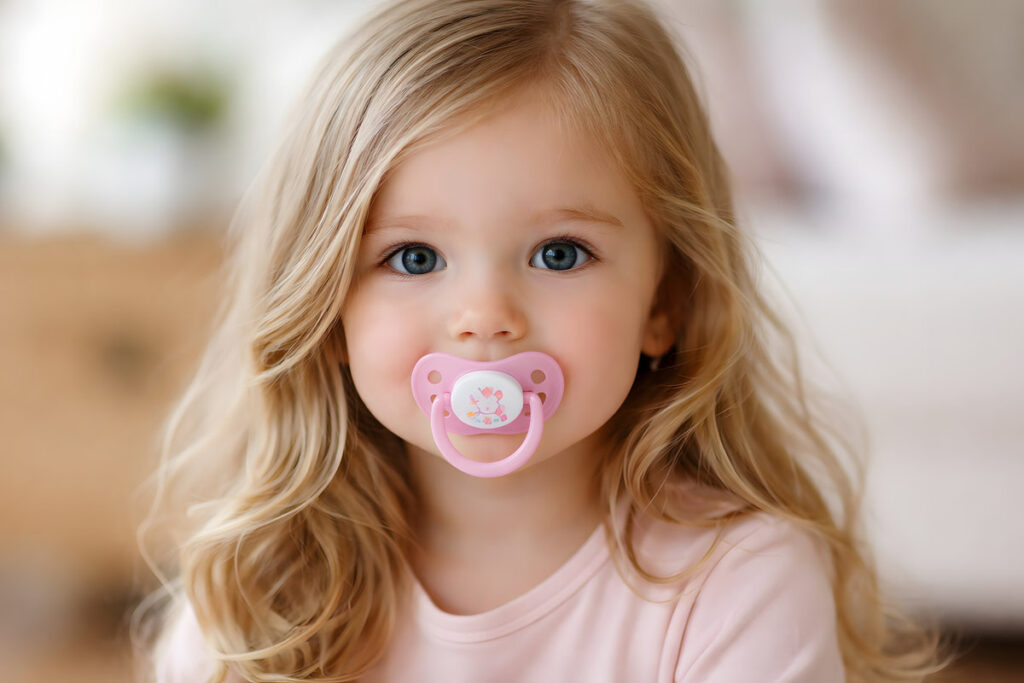
Pacifiers provide comfort to countless infants and toddlers, offering parents a reliable way to soothe fussy babies and help little ones self-regulate during stressful moments. While these simple tools serve an important developmental purpose in the early months and years, understanding when to transition away from pacifier use is crucial for protecting your child’s developing smile and overall oral health.
At All Star Kidz Dental, Dr. Lamb and our dedicated team guide families in Centennial Hills through every stage of their child’s early dental care journey, including navigating the transition away from pacifiers at the right time. As a Diplomat of the American Board of Pediatric Dentistry, Dr. Lamb combines extensive training with a warm, understanding approach to help parents make informed decisions supporting healthy dental development.
Understanding How Pacifiers Affect Dental Development
The sucking reflex is a natural and important part of infant development, providing comfort and helping babies learn to self-soothe. However, prolonged pacifier use can put unwanted pressure on developing teeth, jaws, and palate, potentially leading to complications that are more difficult to correct as they age.
According to research published in the National Institutes of Health, pacifier use was consistently associated with increased prevalence of malocclusions, including anterior open bite, posterior crossbite, and overjet. The risk and severity of dental issues were strongly influenced by the duration, frequency, and intensity of pacifier use, with prolonged use beyond three years significantly increasing the likelihood of structural changes requiring intervention.
The Critical Timeline for Pacifier Weaning
Most pediatric dental authorities, including the American Academy of Pediatric Dentistry, recommend that children discontinue pacifier use by age three. This recommendation is based on extensive research showing that dental complications increase substantially when pacifier use extends beyond this age. Children who stop using pacifiers before age three typically experience fewer dental alignment issues and may even see some minor problems self-correct after weaning.
The second and third years of life represent an ideal window for transitioning away from pacifiers. During this time, children are developing new coping mechanisms and communication skills, making it easier to introduce alternative comfort strategies.
Common Dental Problems Linked to Extended Pacifier Use
Extended pacifier use beyond the recommended age can lead to several types of dental misalignment. An anterior open bite, where the front teeth don’t meet when the mouth is closed, is one of the most common issues associated with prolonged pacifier use. This gap between the upper and lower front teeth can affect how your child bites into food and may impact speech development.
Posterior crossbite represents another concern, occurring when the upper back teeth fit inside the lower back teeth rather than outside where they belong. Additionally, increased overjet, or protruding front teeth, may develop when persistent pacifier pressure pushes the upper teeth forward and the lower teeth backward.
Strategies for Successful Pacifier Weaning
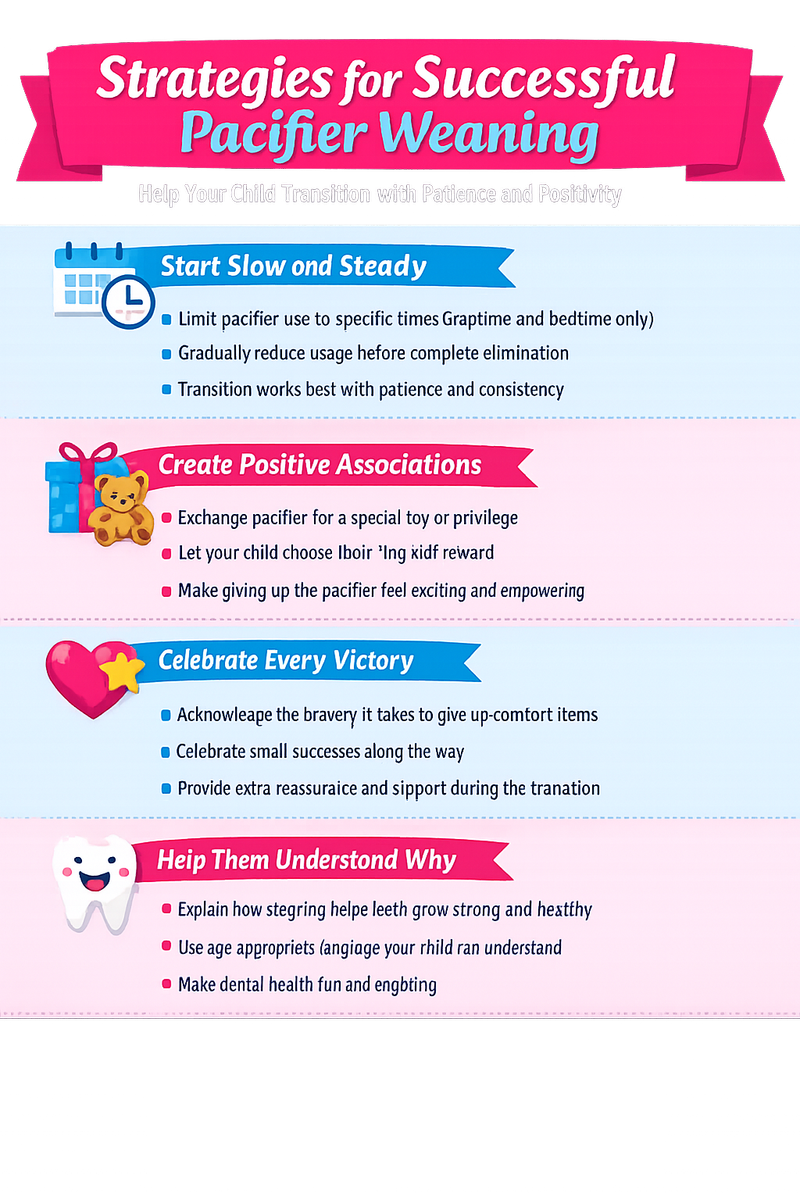
Transitioning away from a pacifier works best when approached gradually and with patience. Begin by limiting pacifier use to specific times, such as naptime and bedtime, before eliminating it completely. Many families find success by establishing a “pacifier trade” where the child exchanges their pacifier for a special toy or privilege, creating a positive association with giving up this comfort item.
Praise and encouragement play important roles in successful weaning. Celebrate small victories and acknowledge that giving up a beloved comfort item requires bravery from your little one. If your child is old enough to understand, explaining how stopping pacifier use helps their teeth grow strong and healthy can provide motivation.
Supporting Your Child During the Transition
Recognize that pacifier weaning may temporarily increase fussiness or difficulty with self-soothing. Offering alternative comfort methods, such as a special blanket, stuffed animal, or extra cuddles during stressful moments, helps fill the void left by the pacifier.
Some children benefit from a more gradual approach, while others respond better to a quick, clean break. Understanding your child’s temperament and choosing a strategy fitting your family’s needs increases the likelihood of success.
Professional Support for Healthy Dental Development at All Star Kidz Dental
Regular checkups and cleanings with a pediatric dentist help detect early dental changes related to pacifier use. Dr. Lamb can assess your child’s oral development, provide personalized guidance on pacifier weaning, and address any concerns about dental alignment. Our team at All Star Kidz Dental understands that every child develops at their own pace, and we work closely with families to create individualized plans that support healthy habits.
All Star Kidz Dental serves families throughout Centennial Hills, making quality pediatric dental care accessible and convenient. Dr. Lamb’s training as a Diplomat of the American Board of Pediatric Dentistry ensures your child receives the highest standard of care in a warm, welcoming environment. Our Centennial Hills Las Vegas location is designed to make dental visits comfortable and positive experiences, helping children develop healthy attitudes toward oral care. If you have questions about pacifier use, dental development, or any aspect of your child’s oral health, we invite you to learn more about our practice and schedule a visit with our team. Contact us today to discuss your child’s unique needs and receive guidance on supporting their healthy smile development.