

If you’ve ever been jolted awake by the sound of your child grinding their teeth at night, your concern is completely understandable. Bruxism, the clinical term for teeth grinding and jaw clenching, is more common in children than most parents realize, with research showing prevalence rates ranging from 13% to nearly 50% depending on age group. The reassuring news is that it often resolves on its own, but knowing what to watch for can make all the difference for your child’s smile.
At All Star Kidz Pediatrics in Las Vegas, Dr. Christopher Lamb helps families navigate exactly these kinds of concerns every day. As a Diplomat of the American Board of Pediatric Dentistry, Dr. Lamb holds the highest level of training a pediatric dentist can achieve, and his warm, personalized approach sets our practice apart from the corporate dental experience. Scheduling regular checkups and cleanings is one of the best ways to catch early signs of bruxism before they lead to bigger problems.
What Causes Teeth Grinding in Children?
Bruxism in children rarely has a single clear cause. It tends to be a mix of physical, emotional, and genetic factors, and it can look different from one child to the next. Understanding the most common contributors can help parents feel more informed when they hear grinding coming from the next room.
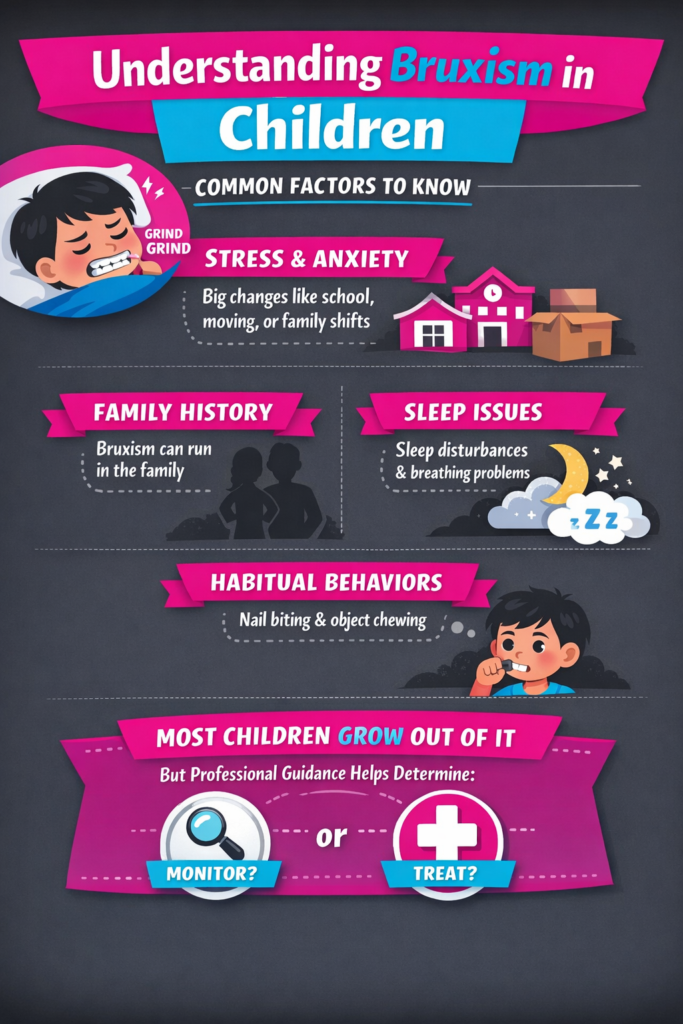
Several factors are commonly linked to bruxism in children, and they’re worth knowing about. Stress and anxiety top the list, as big life changes like starting a new school, moving to a new home, or shifts in family dynamics can show up physically as nighttime teeth grinding. Family history also plays a role, with children more likely to grind if a parent does. Sleep disruptions, including irregular breathing during sleep, have also been associated with bruxism. Other oral habits, such as nail-biting and object-chewing, have been identified as related behaviors.
Many children with bruxism experience no lasting effects and grow out of it naturally as their permanent teeth develop. Even so, professional guidance helps you distinguish between something to simply monitor and something to treat.
 Signs Your Child May Be Grinding Their Teeth
Bruxism most often happens during sleep, which means parents are frequently the first to notice it, either by hearing the sound directly or by picking up on daytime clues. Morning headaches, jaw soreness, tooth sensitivity, and ear discomfort are all symptoms worth mentioning at your child’s next visit. Some children will complain that their face or jaw hurts, but they cannot explain why.
A pediatric dentist can spot signs of bruxism invisible to the untrained eye. Dental X-rays help reveal enamel wear patterns and structural changes, indicating grinding has occurred over time. A literature review on bruxism in children found that the condition can lead to tooth wear, headaches, facial muscle pain, and chewing discomfort when left unaddressed. Catching these changes early gives Dr. Lamb the chance to step in before more significant damage develops.
When Should You Call the Dentist?
Most childhood bruxism is mild and self-resolving, particularly when baby teeth are involved. Still, there are situations where professional attention is genuinely needed. The following signs are worth taking seriously:
- Flattened or shortened teeth: Visible wear on the chewing surfaces may indicate significant grinding over time
- Frequent morning headaches: Waking up with head or jaw pain regularly is a red flag
- Tooth sensitivity: Increased sensitivity, especially to cold, can point to enamel erosion from grinding
- Facial or jaw pain: Soreness in the face or jaw during waking hours shouldn’t be dismissed
If any of these signs are present, an evaluation is the right next step. Left unaddressed, significant bruxism can lead to enamel loss requiring dental fillings and restorations to repair the affected teeth. In some cases, grinding is associated with bite irregularities or sleep disturbances, and early care prevents more complex treatment later. Dr. Lamb will also ask about any history of pediatric dental emergencies or tooth trauma, as these can sometimes contribute to bite patterns linked to grinding.
Schedule an Evaluation at All Star Kidz Pediatrics
You don’t have to figure this out on your own, and you shouldn’t have to. Dr. Lamb and the team at All Star Kidz Pediatrics take a genuinely caring, personalized approach to every visit, taking time to listen, explain what we’re seeing, and build a plan that actually fits your family.
Whether your child is grinding their teeth or you simply want to stay ahead of any dental concerns, we’re here for your family. We serve communities throughout Las Vegas and the surrounding areas, and we accept most major insurance plans, including Medicaid. Contact our office today to schedule your child’s appointment.