While most children naturally lose their baby teeth to make way for permanent ones, some teeth stubbornly refuse to budge, creating a condition affecting roughly 12 to 20 percent of children worldwide. When primary teeth linger past their expected timeline, parents face important questions about their child’s oral development and the potential consequences of delayed tooth loss.
At All Star Kidz Dental in Centennial Hills, Las Vegas, Dr. Lamb and our specialized pediatric dental team help families navigate the complexities of retained primary teeth. As a Diplomat of the American Board of Pediatric Dentistry, Dr. Lamb brings advanced expertise in diagnosing and treating developmental dental concerns, including early dental care issues affecting tooth eruption patterns.
Understanding Retained Baby Teeth
Retained deciduous teeth, also called over-retained primary teeth, occur when baby teeth remain in the mouth beyond their typical shedding age. Each primary tooth follows a predictable timeline for loosening and falling out, usually between ages six and twelve. When a baby tooth remains firmly in place beyond this window, it may signal an underlying dental concern that requires professional evaluation. The most commonly retained primary teeth are the second molars, though any baby tooth can potentially become over-retained.
Research published in the Journal of Clinical Pediatric Dentistry indicates prevalence rates have increased in recent years, with some studies reporting rates as high as 59.8 percent in certain populations. This rise correlates with changes in children’s eating habits, particularly the increased consumption of softer foods that require less chewing force. Geographic variations also play a role, with varying retention rates across populations and regions.
 Why Baby Teeth Don’t Fall Out
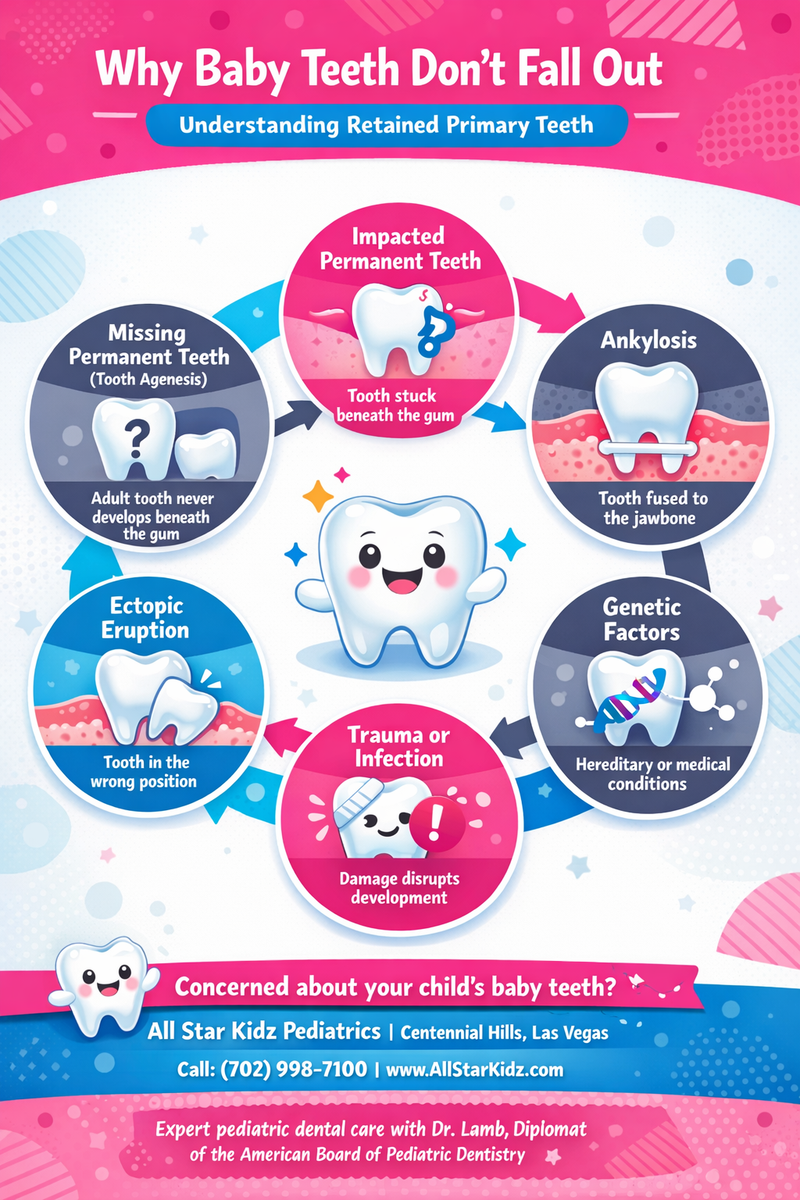
Several factors can prevent primary teeth from shedding naturally. The most common cause involves congenitally missing permanent teeth, a condition called tooth agenesis, where the adult tooth simply never develops beneath the gum line.
Common Causes
Without a permanent successor to push the baby tooth out, the primary tooth remains anchored in place. Other causes include impacted permanent teeth, where the adult tooth develops but becomes trapped beneath the gum or bone, unable to erupt properly. Ankylosis occurs when the baby tooth fuses directly to the jawbone, preventing normal loosening and shedding.
Ectopic eruption occurs when a permanent tooth grows in an abnormal position, deviates from its intended path, and fails to displace the primary tooth. Previous trauma or infection can damage the tooth or surrounding structures, disrupting normal dental development and eruption patterns. Genetic factors and certain medical conditions can also contribute to retained primary teeth, and children with developmental syndromes may show delayed tooth loss as part of broader craniofacial differences.
Potential Complications of Retained Primary Teeth
While some baby teeth retain function for years, others can create significant oral health challenges. The complications depend largely on the tooth’s condition, position, and the presence or absence of a permanent successor waiting to emerge. Crowding is one of the most common problems, as retained primary teeth occupy space that permanent teeth are trying to erupt into.
This can force permanent teeth to emerge in incorrect positions, leading to crooked teeth and bite alignment issues. Regular checkups and cleanings help identify these spacing concerns early, when intervention proves most effective. Bite problems frequently develop when retained baby teeth prevent proper alignment of the dental arches, with over-retained teeth sometimes sitting lower than surrounding permanent teeth, creating an uneven bite surface affecting chewing function and jaw development.
Root resorption, the gradual breakdown of the tooth’s root structure, commonly occurs with retained primary teeth. As the root deteriorates, the tooth becomes less stable and more prone to decay or infection. Aesthetic concerns arise when retained baby teeth remain visible in a teenager’s or young adult’s smile, as primary teeth appear smaller and differently shaped than permanent teeth.
Diagnosis and Treatment Options
Identifying retained primary teeth requires a thorough clinical examination combined with diagnostic imaging. During routine dental visits, pediatric dentists assess whether baby teeth are loosening on schedule and whether permanent successors are developing properly beneath the gums. X-rays provide crucial information about permanent tooth development, position, and any obstacles preventing normal eruption.
Treatment decisions depend on multiple factors, including the child’s age, the presence or absence of a permanent tooth, the condition of the retained tooth, and its impact on surrounding teeth. When the baby tooth remains healthy, and a permanent replacement tooth is missing, dentists may recommend monitoring and preserving the primary tooth indefinitely, as it can function effectively for many years. If crowding or bite problems develop, orthodontic treatment may help manage spacing issues while preserving a healthy retained tooth.
When extraction becomes necessary, dental extractions performed by experienced pediatric dentists ensure minimal discomfort and optimal healing. Removing a retained primary tooth may allow an impacted permanent tooth to erupt naturally, or it may create space requiring orthodontic management or eventual replacement with a dental bridge or implant in adulthood.
Schedule a Consultation at All Star Kidz Dental
If your child’s baby teeth aren’t falling out on schedule, a professional evaluation provides clarity and peace of mind about the best path forward. Early assessment enables proactive management of potential complications, ensuring your child’s dental development stays on track toward a healthy, confident smile.
All Star Kidz Dental in Centennial Hills serves families throughout the Las Vegas area with comprehensive pediatric dental care. Our team, led by Dr. Lamb, combines specialized training with a compassionate approach to help children feel comfortable during dental visits. We offer flexible scheduling and accept most dental insurance plans to make quality care accessible for every family. Contact us today to schedule an appointment and discuss your child’s dental development with our experienced pediatric dental team.